




In the pharmaceutical industry, packaging isn’t just a final step; it’s a safeguard for product integrity, patient health, and regulatory compliance. A well-designed packaging process ensures that medicines reach patients free from contamination, accurately labeled, and effective for their intended use. Pharmaceutical packaging quality control is therefore not optional; it is essential for sustaining both compliance and operational excellence in a highly regulated landscape. Explore our pharma packaging solutions for more information on available equipment.
Why Quality Control Matters in Pharmaceutical Packaging
Errors in pharmaceutical packaging can have severe consequences, including regulatory penalties, costly recalls, and potentially serious risks to patient safety. Issues such as improper sealing, mislabeling, or contamination not only disrupt operations but can also damage brand reputation. Rigorous quality control prevents these risks by ensuring every packaging batch meets strict standards for safety and efficacy.
It is imperative to be compliant with international best practices and regulations, including the FDA, cGMP (current Good Manufacturing Practices), and 21 CFR Part 210/211. These rules demand comprehensive oversight for each step in the packaging process, from raw material sourcing and facility hygiene to labeling, documentation, and distribution.
Core Regulatory Standards
- FDA (Food and Drug Administration): Governs safety, labeling, and traceability of pharmaceutical products.
- cGMP (current Good Manufacturing Practices): Defines all requirements for manufacturing, packaging, and quality control to ensure consistent quality.
- 21 CFR Part 210/211: Provides detailed rules for production, processing, packaging, and storage of drugs, including documentation and contamination control.
- ISO 15378:2017: Integrates GMP into primary packaging manufacturing for medicines, requiring all production and quality control methods to be clearly defined, validated, and documented.
Understanding and adhering to these standards means both machinery and processes must maintain operational efficiency while fulfilling strict legal obligations.
Common challenges in production and quality control
Maintaining high standards of quality in pharmaceutical packaging involves several challenges:
- Detecting defects, contamination, or improper fills.
- Ensuring consistent quality across production batches.
- Balancing production speed with regulatory compliance and safety.
Common challenges in production and quality control
Maintaining high standards of quality in pharmaceutical packaging involves several challenges:
- Detecting defects, contamination, or improper fills.
- Ensuring consistent quality across production batches.
- Balancing production speed with regulatory compliance and safety.
Meeting these challenges requires skilled personnel, robust processes, and machinery capable of precise quality control.
Selecting the right equipment and technology
Choosing the appropriate equipment is critical for effective pharmaceutical packaging quality control. Key considerations:
- Machine type: Blister machines, vial fillers, bottle cappers, or sachet packers should be chosen based on batch size and dosage form requirement.
- Inspection systems: Automated vision inspection, weight verification, and leak detection safeguard against human error.
- Automation and integration: Equipment that adapts to different batch sizes and integrates with upstream and downstream production lines.
- Flexibility and efficiency: Machines that optimize throughput without compromising accuracy or safety.
Proper selection ensures consistent product quality, reduces errors, and facilitates regulatory compliance.
Operational best practices and maintenance
Even advanced packaging machinery requires structured operational practices to maintain safety, quality, and efficiency:
- Preventive maintenance: Regular checks and timely replacement of critical components prevent downtime and quality lapses.
- Process monitoring: Continuous, real-time tracking of manufacturing parameters detects problems early.
- Staff training and protocols: Ensuring operators are fully trained in quality standards and safety procedures.
- Documentation and record-keeping: Accurate logs to demonstrate compliance and support audits.
Implementing these practices strengthens production reliability and reinforces overall pharmaceutical packaging quality control.
Trends and innovations in pharmaceutical packaging
Recent trends in Pharmaceutical Packaging enhance both quality and efficiency:
- Advanced automation and Robotics: Increase precision and reduce human error.
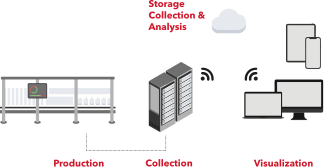
- Digital monitoring and IoT integration: Enable real-time quality management and predictive maintenance.
- Flexible and sustainable packaging: Support compliance while addressing environmental considerations.
Investing in modern technology improves operational efficiency, ensures FDA compliance, and reduces long-term costs.
Emerging Trends Shaping 2025 and Beyond Sustainability and Eco-Friendly Packaging
The pharma industry is accelerating its shift toward sustainability to meet stricter regulations and growing consumer demand for greener products. Common initiatives include:
- Use of biodegradable, recyclable, and compostable materials such as plant-based films and paper-based blister packs.
- Designing minimalist packaging to reduce material usage and waste.
- Adoption of mono-material packaging to simplify recycling processes.
- Leveraging advanced chemical recycling to produce high-quality, reusable plastics.
- Corporate sustainability goals emphasize carbon footprint reduction, circular economy models, and transparent eco-labeling.
- Smart and Connected Packaging with time-temperature indicators and biosensors or temper-evident seals and serialization.
- Patient Centric – Child resistant yet senior friendly closures and multi-lingual labelling to aid patients.
Pharmaceutical packaging in 2025 is no longer just about protection—it is a sophisticated system integrating safety, sustainability, technology, and patient experience. Robust quality control coupled with cutting-edge innovations ensures that medicines not only reach patients safely but also deliver superior healthcare outcomes. Staying ahead in this evolving landscape requires a proactive embrace of new materials, technologies, and regulatory standards, ultimately fostering trust and advancing global health.
Mespack with its varied portfolio customized especially for Pharmaceutical industry provides assurance of quality, compliance, and efficiency, thus assisting with the worldwide delivery of essential medicines to patients. We offers turnkey solutions that redefine the future of pharmaceutical packaging, know more at www.mespack.com